
6.7.25
weather editing, getting out of AI innovation budgets, rise of food borne illness, embryo screening

Can’t believe its already June. This year has absolutely flown. We’ve been insanely busy with YC and other opportunities, and I’m super stoked to say I signed a TS on a business that I am insanely excited about. More to come here when I can share. I’m a day late to getting this out, but nevertheless here we are. I am purposely avoiding commenting on the Trump/Musk stuff, but the X memes are really giving me a kick. And with that, my weekly musings…
Weather Editing
This is straight out of a sci-fi horror (or Utopian! depending on your feelings) film — but it’s actually happening. Augustus Doricko talked about this a bit on TBPN this week, but throngs of scientists in China are working on weather modification, primarily through cloud seeding.
This article is from 2020: 35,000 people were working on cloud seeding at the time (!!). What is cloud seeding, you may ask? TLDR: you basically use chemicals to juice liquid particles so they get heavy and drop — like rain or snow. It’s wild. There are obviously some good use cases (maybe?) — like improving agricultural yield in drought-stricken areas — but it honestly scares the shit out of me. It’s so easy to imagine how this could spiral out of control. Feels like god-mode in a way I’m just not ready for. That said, as natural disasters presumably get worse, we do need solutions to help prevent or reduce severity. Companies like Aeolus Labs or Pano.ai are part of a growing theme of climate resilience — and I suspect demand for this will only grow over time.
But ultimately, $$ reigns supreme — and any climate solution has to be rooted in an economic argument.
Breaking out of “innovation” budgets for AI
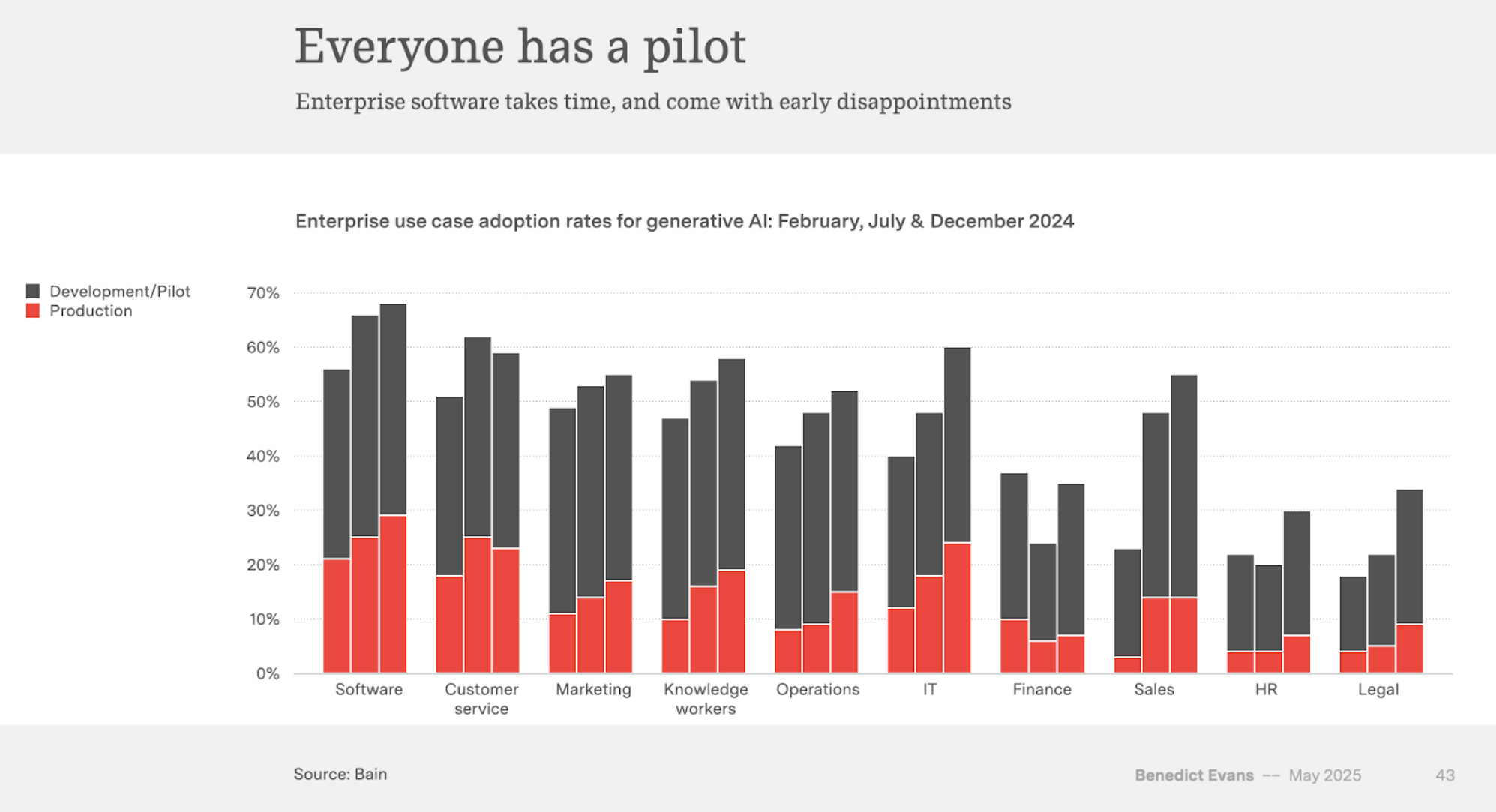
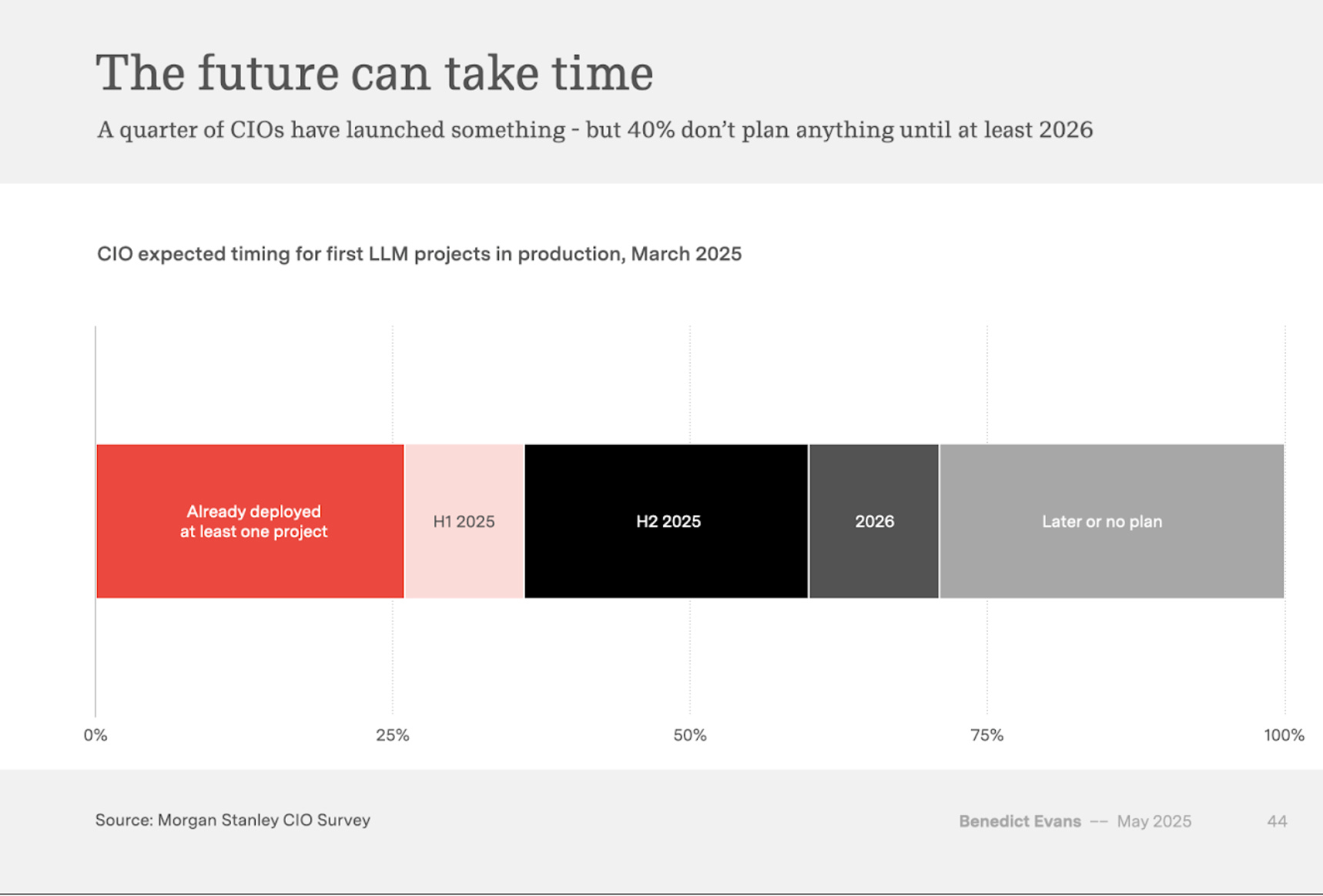
With the proliferation of AI applications, startups ran toward innovation budgets within large enterprises as a way to get pilots kicked off quickly. For some, this has — and will continue to — turn into full-scale deployments. For others, it’s resulting in the long-predicted realization of why innovation budgets have often been called the place where good ideas go to die inside enterprises.
I’m not an investor in solutions like Harvey or Hebbia, but I’d be very curious to know what percentage of their revenue is driven by pilots vs. full-scale deployments — and more specifically, where those budgets are coming from. I’m sure it varies, but it’s one thing to grow rapidly through pilot adoption, and a whole different beast to embark on real expansions and rollouts at scale.
When you start to see real expansion budgets — not coming from innovation — that’s when you know something is actually taking hold inside a large company. This is one of the filters I use when evaluating AI startups selling into the enterprise: where exactly is the budget coming from? And if it’s innovation, what does the path look like from innovation budget to business unit budget?
Ideally, I want to see it come out of core business units. But I also get that most enterprises are still early and hesitant in their AI adoption. They all know they need to be doing something — but how they go about it is still very much in flux.
I really liked this presentation that Benedict Evans put together. There are some great nuggets on the model landscape, but liked his point here: “For most people in most jobs, it’s not easy to work out what to do with an LLM”— and it’ll just take time.
Below are two charts from his deck that I think really capture where we are in the cycle of enterprise AI adoption. It’s here — but we’re still early.
Rise of food borne illnesses and contaminated food
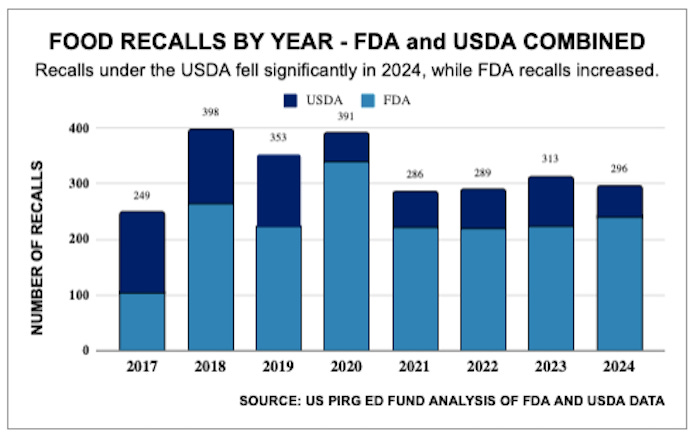
Anyone else notice just how much more frequently things get recalled — or how much more common food borne illness feels lately? I was curious if it was just media panic or if that’s actually the case.
The answer is… it’s complicated.
According to PIRG (a non-profit, bi-partisan I hope), the FDA tallied 241 food & beverage recalls in 2024 — an 8% increase compared to 2023. But the USDA reported a 38% decline in recalls over the same period.
For context, the FDA regulates about 77% of the food supply, so by and large, you could argue there's been an overall increase. But what’s more troubling is this:
More people in the U.S. got sick from contaminated food outbreaks in 2024 than the year before — and the number of people hospitalized or who died doubled.
Point being: not all recalls are created equal. And lately, we’ve seen more high-profile ones — think eggs, deli meat, Boar’s Head, etc.
The second problem is the speed. The time it takes for a recall to ripple through the supply chain can take weeks — and often, that’s too late. Especially when the severity is high.
I’m not sure I have a grand thesis here other than: it underscores just how complex and fragile our supply chains are, particularly when it comes to our most essential resources.
Agriculture and food have notoriously been difficult markets to sell into or build big businesses in — but I’m increasingly paying attention. Like energy, it’s one of the most important sectors in the world. Which means it’s going to need serious innovation just to keep pace with the world changing around it.
Conflicting feelings on embryo screening
The company Nucleus just announced their new product, Embryo, which — as they explain — “enables parents undergoing IVF to analyze and compare up to 20 embryos across over 900 hereditary conditions and 40 additional analyses beyond basic viability, spanning cancers, chronic conditions, appearance, cognitive ability, mental health, and more.”
And I feel so freaking conflicted on this.
On one hand, my initial reaction is: how incredible would it be to eliminate some of the most heartbreaking diseases that plague our society — Alzheimer’s, cancer, etc. But on the other hand, not unlike weather seeding, it feels like full-on god-mode — something that could be used for good, yes, but just as easily for harm.
Who are we to decide who is smart enough, pretty enough, or worthy enough to “survive” in a biological sense? The line between helping and harming — between what’s possible and what’s ethical — feels incredibly thin. And I really struggle with it.
What are the ethics of all this? And who even decides what’s right or wrong? I certainly don’t have the answers, but it’s something I’ve been thinking a lot about.
I’m both intrigued, optimistic, and totally terrified.
It’s a brave new world.
And with that a tune. Good ole Bob Dylan…
Stay weird. Stay Curious.
-CBR